Saturday, January 18, 2014

Collaboration in a technology rich environment

I teach elective classes in a middle school, grades 6-8, that tend towards project based learning. With the new common core looming in the immediate future, how can we who are sometimes considered on the periphery, or extra, become more involved in the implementation of the common core?

• Paralysis by reflection
       More reading and writing is going to become prevalent in history, science and language arts, particularly around reference texts. Narrative is emphasized less in the new standards. Many teachers are responding to the need for more language arts with reflections on learning, a facet of the new common core as well.

CCSS.ELA-Literacy.W.5.10 Write routinely over extended time frames (time for research, reflection, and revision) and shorter time frames (a single sitting or a day or two) for a range of discipline-specific tasks, purposes, and audiences.

Teachers like me, who teach classes where creative products are central to student learning, are being asked to use the reflection method to show evidence of learning, and writing. At our site, I am the only electives teacher with a degree in English, whereas most art and music, physical education as well, are not trained to assess writing. How can we balance this and keep the response to creativity authentic and meaningful? I was disappointed in my students' reflective response on a recent project, and realized, it is not them, it was my prompt to blame.

• Commentary over time
     One way to build in reflection, without calling it that (students smell a reflection a mile away), is to create an opportunity to show growth over time. As students draw, or film, or work in a music editing application, stop them, and have them take a screen shot, or use a cell phone to capture their progress. Do this periodically, a couple of times a week until it becomes routine. Ask students to share their feelings about their progress with each other in small groups, showing evidence with their series of images/recordings. This elicits a more honest appraisal, and a chance for students to take risks and learn from mistakes, exercising the "grit" muscle that is all the rage in education today.

• Passion
     What do you like about your work? Students enjoy being creative, and often don't get a chance to talk about their passion. Why not give students more of an opportunity to be passionate about why they are doing something creative, or recognizing the skill and creativity of their peers? Again, with evidence available over time, students can cite specific instances of where there "ah-ha" moments happen. And, of course, it doesn't have to be in writing. Recording a short video or audio statement; or interviewing a peer, or you as a teacher recording and documenting a small group discussion of laudatory commentary is equally effective.

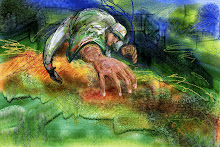
In the image here, I was trying to incorporate both texture, and layering using Adobe Photoshop Elements working in parallel with my students. I scanned around the image looking for sections that I really liked, and took screen shots of them. I then intend to rework these three shots more with additional layers.


Friday, September 6, 2013

2013 School Year Underway

This is going to be an interesting year. I've been teaching for over 20 years, and this year I turn 60. Thoughts turn to what one does next. Education is going through a huge transition with the continued advances in technology, and the nation-wide adoption of the Common Core Standards. How will your site/district/community deal with test scores lower than what the public is used to with standardized testing? How will educators adjust to a mandate to incorporate technology into teaching and learning, even if access is limited? How do we, as educators, maintain the enthusiasm and freedom of creativity while protecting our rights as teachers to take risks with curriculum and pedagogy?

I have been inspired this summer by the likes of Bobby Chiu, Steve Silver, Scott Robertson, Sparth and Nick Pugh. Take a look at these artists, and look at the ways they are giving back, (especially Bobby and Steve). How should I give back is what drives me these days.
exoterran newt
Exoterran newt- Painter 11, Photoshop CS5- Jeff Brain

Monday, December 10, 2012

Great deal from Plasq

Plasq, makers of ComicLife, continues to make strong statements in education. Recently, they offered a 25% discount on their already incredibly low priced products when partnering with the My Hero project. My Hero is a wonderful organization well worth exploring, as is Comic Life. I use Comic Life in the classroom to teach digital citizenship, and will be expanding my use into other projects. Here are links to these two fantastic groups: http://plasq.com/

Saturday, November 17, 2012

Curriculum design in the 21st century continues to be a moving target. As we combine best pedagogical practices with ever more amazing and powerful tools in a media drenched age, it becomes increasingly more challenging to focus on student learning in specific and focused ways.
This image is inspired by the thought of one of my digital super villains creating a virus that is personified on the net by dragon iconography. I am finding that the digital citizenship/comics creation unit I am growing is the most satisfying work of my teaching career. Its combination of personal passion and deep teaching opportunities inspires me every day I get to work with it.

Monday, April 16, 2012

Writing on the Wall


I teach a digital citizenship unit inspired by my work in collaboration with Common Sense Media. In this unit, I posit a near future time where my students are transformed (sometimes I say how, for instance, a nanobiology accident…) into superheroes to combat digital villainy taken to an extraordinary level. Here is my vision of a virus attacking raw code in the virtual environment of software language. I call it "Writing on the Wall".

Saturday, February 25, 2012

Deep into the New Year


Deep into the New Year
February finds us over the 100 day mark in the school year, a time when potential doldrums hit both teacher and student. How are we fighting off the mid-year "blahs"?

I make sure that my classroom is working on their most exciting project to date, and throw more multimedia into the mix, video teases, podcast nuggets, etc. It is never too early to consider what one is going to showcase for parent visitations (Open House) and how one will display student learning.

I've been inspired by my students at SFSU and my colleagues to continue to risk new ideas and curriculum, even as I approach the twilight of my career. Shout out to you folks.

The "360" project is a prime example. Inspired by the work of San Francisco artist, Pep Ventosa, I asked students to take at least 30 digital photos using themselves as the subject, and layer them in Adobe Photoshop Elements. The results were spectacular:

Saturday, November 19, 2011

Discerning Importance


We just finished a round of student-led parent teacher conferences at our middle school. What struck me was the common thread of my students, echoed yesterday when we met as a group with another advisory, that they had trouble discerning the level of importance of assignments from their teachers. This has led to increased stress, and anxiety, and lowered performance, often on the most high stakes assessments.

At the same time, I am studying for the California Teachers of English Languages test, a test that effects my professional credentialing. As I read numerous textbooks and educational tracts on language acquisition, cultural differentiation and sociopsychological transitions, and then take the sample tests, I am struck by the disconnect between the testing structure, how we as teachers model testing anxiety, and how we hold dearly to types of assessment that don't really show learning. I am good at test-taking, and will pass this hurdle in my career, but don't trust the process, or its intended end. However, the reading does help me rekindle my interest in personal professional development, and how to best approach planning for my units. I never give tests, as mine is a project based classroom. I do need to make more frequent checks for understanding, do need to work on ways to give more immediate feedback, and do need to continue to vary the ways students can show both what they learned and how they learned.

The image is an example for my sixth graders who have finished a mask comprised of images of their lives (Adobe Photoshop Elements). My earlier post on totems is a different version of this lesson. Those who have finished then had the option of making the mask talk, using ComicLife to add the speech bubbles. This lesson then leads to a meta-unit on digital citizenship where the students will create superheroes to tackle immense issues involving the integration of technology in the life of the global culture we all live in.